
Nothing Worth Remembering
We don’t build cathedrals anymore.
Do we even know how?
Think about the great cathedrals of Europe. Notre-Dame took nearly 200 years to complete. The Sagrada Família in Barcelona has been under construction since 1882 and still isn’t finished. These weren’t just buildings - they were generational projects. Craftsmen spent their entire careers perfecting a single rose window or buttress, knowing they’d never see the finished structure.
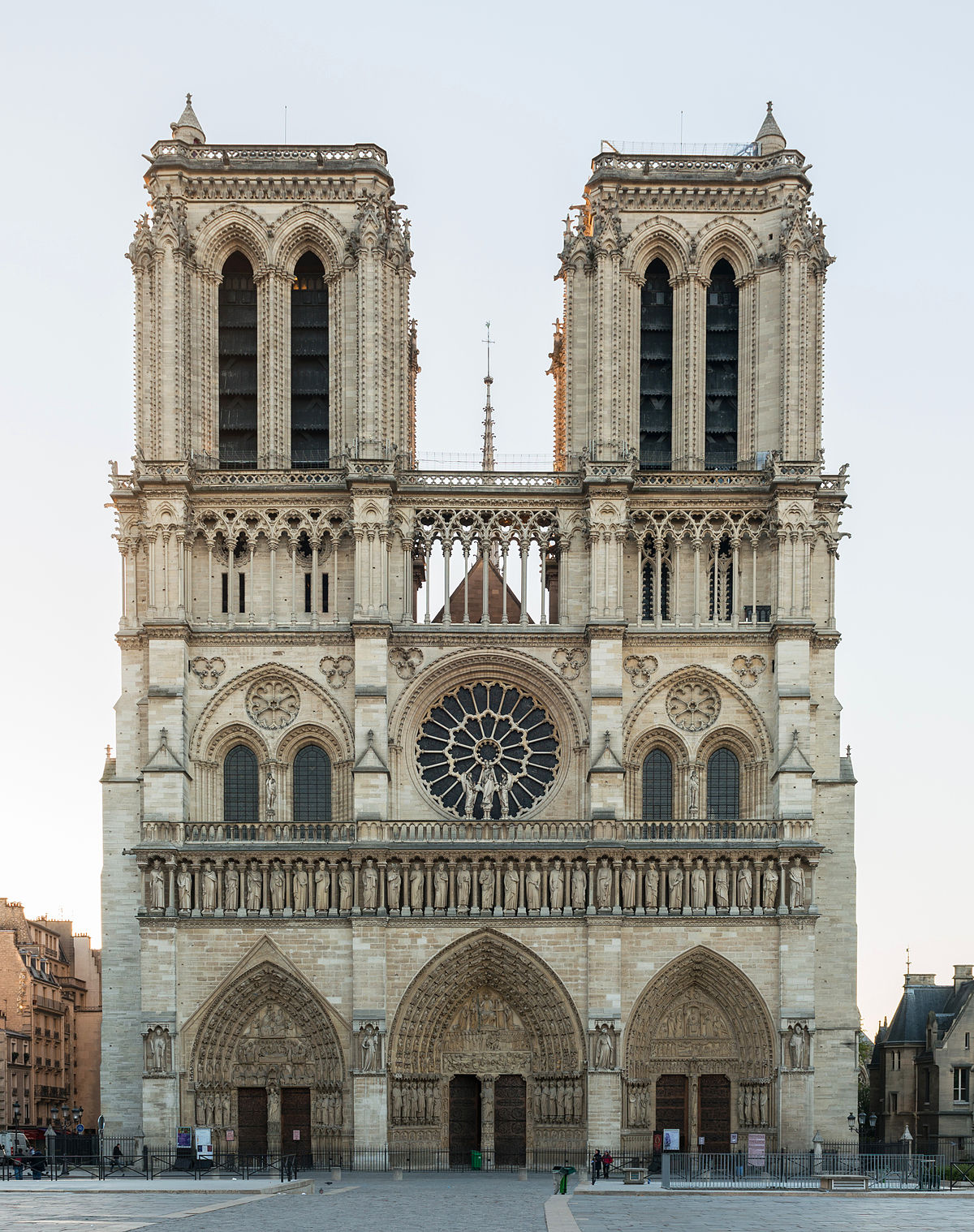 Notre-Dame de Paris - nearly 200 years to build. Photo: Daniel Vorndran, CC BY-SA

Today? Churches meet in schools. Strip malls. Metal buildings with industrial carpet and folding chairs. Those are the structures we have now. And I’m not trying to be a snob about it - there’s nothing wrong with meeting in a school gym. But we’ve lost something in the process. We’ve traded craftsmanship for convenience.
We don’t build houses like cathedrals anymore, either. Even in wealthy areas, it’s just faster to throw them up quickly. Three months and you’ve got a house. Sure, it’s a house. But it’s not the kind where every piece of trim was hand-cut, every window frame precisely fitted, every decision deliberate.
The same thing is happening with software.
The age of handcrafted software
There was a time - not that long ago - when you could tell someone spent months building a website. Sites like Smashing Magazine and CSS-Tricks weren’t just informative, they were beautiful. Every interaction was considered. Every animation served a purpose. You could feel the care that went into them.
Or think about apps like Things on Mac. Or Tweetbot before Twitter killed third-party clients. These weren’t just functional - they had personality. Soul. Someone sat down and obsessed over every pixel, every transition, every micro-interaction.
Those were our cathedrals.
But now? When AI designs a website, you get one of two things: a purple gradient with glassmorphism, or something that looks like it was ripped directly from Twitter - color bar on the left, cards everywhere, way too much white space.
AIs are derivative. They have to be. They can only remix what they’ve seen before. They don’t have taste, or vision, or the ability to say “you know what would be weird but also kind of amazing?” They optimize for the average, for what works, for what’s been done before.
We’re standing up software in hours instead of months. But we’re not building cathedrals. We’re building tract homes and strip malls.
The trade-off we’re making
Speed matters. It used to take a year to build a house - now you can do it in three months. It used to take months to build a decent web app - now you can do it in a weekend.
And yes, some of that is better tools. We invented power saws, nail guns, pneumatic framing nailers - tools that should have made houses better. And they could have. You can do things with a power saw that would take weeks by hand. But that’s not what happened. Instead of using those tools to build more carefully, we used them to build more quickly. The tools didn’t make the houses worse. They made building fast enough that worse became good enough.
Software followed the same arc. We got frameworks, component libraries, build systems that handle the tedious parts. Those are genuinely better tools. But the more powerful the tools get, the faster we throw things together - and the more willing we are to sacrifice quality. It’s like some law of nature: the easier it becomes to build something well, the less likely we are to bother.
The tools don’t degrade quality. They degrade the incentive for quality.
And now we’ve got the most powerful tool we’ve ever had - AI - and we’re using it to build the cheapest, simplest structures to get the job done. Because we can. Because it’s efficient. Because nobody wants to wait a year for a website when they can have one tomorrow.
Are we really better off?
Yes, it’s a house. Yes, it’s a store. Yes, it’s a functioning web application. But it’s devoid of personality. It lacks soul. There’s no culture, no craft, no evidence that anyone cared beyond “does it work?”
I mean, strip malls work. They’re functional. You can buy things there. But does anyone love a strip mall? Does anyone drive past one and think “wow, that’s beautiful”? Do people take photos in front of them?
What we’re sacrificing
AI makes it easy to build software. Really easy. And that’s not a bad thing - I’ve built apps in hours that would have taken me weeks before. I’m not standing here pretending I’m above it.
But we need to be careful. Because the more we optimize for speed and efficiency, the more we’re going to see the lowest tolerable quality become the norm. Not the lowest possible quality, but the lowest tolerable. The point where something works just well enough that nobody complains.
That’s the real danger. Not that AI will write bad code, but that it will write just-good-enough code. And we’ll get used to it. We’ll forget what the alternatives looked like. We’ll train a generation of developers who never experienced what it felt like to hand-craft something beautiful.
There will be more options. Things will be cheap. Everything will be functional.
But what are we sacrificing?
If we’re not careful, we’re going to look up one day and realize that we live in a world of strip malls and tract homes. Everything will look the same. Feel the same. We’ll have speed and efficiency and endless options.
And absolutely nothing worth remembering.
This post was dictated by a human and edited by Claude Sonnet 4.6